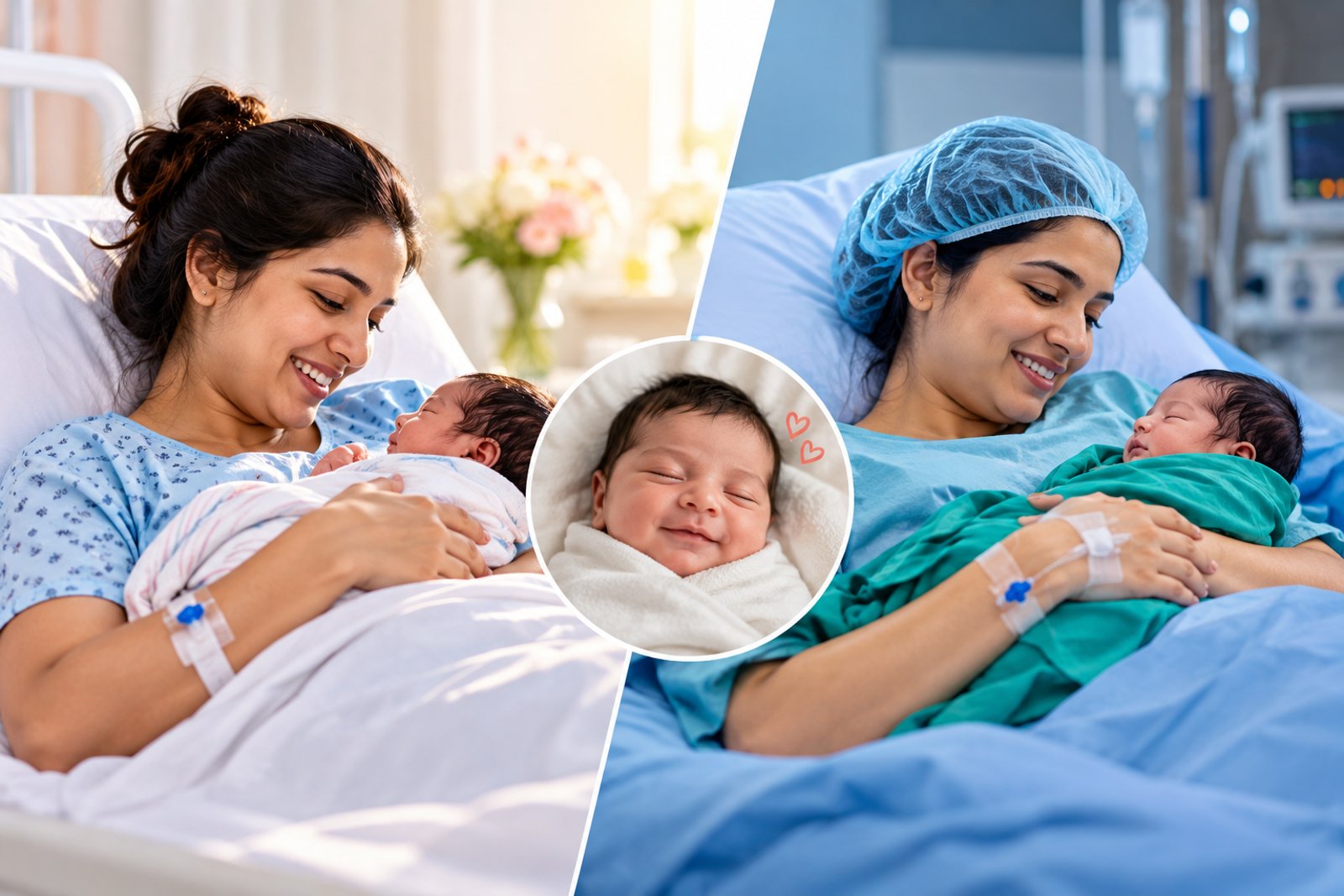
Choosing how to give birth is a big decision for many parents. Normal Delivery vs C-Section is a topic that often raises questions. Both childbirth options have unique benefits and risks. While some women plan for a vaginal delivery, others may need a cesarean section. Understanding these birth choices can help you feel more prepared and confident. In many cities, hospitals offer both methods to support maternal health.
What Is Normal Delivery?
Normal delivery, also called vaginal delivery, is when a baby is born through the birth canal. During this process, the mother goes into labor naturally or with medical help. For many women, this is the most common way to give birth. The World Health Organization (WHO) notes that most births worldwide happen this way.
Additionally, normal delivery may involve less pain after birth compared to surgery.
What Is a C-Section?
A C-section, or cesarean section, is a surgical birth. In this method, doctors deliver the baby through a cut made in the mother’s belly and uterus. Sometimes, a C-section is planned ahead of time. However, it can also be done in an emergency if problems arise during labor. The Centers for Disease Control and Prevention (CDC) reports that about one in three births in the United States are by C-section.
In many cases, doctors recommend this option to protect the health of the mother or baby.
Key Differences Between Normal Delivery and C-Section
While both methods bring a baby into the world, they are quite different. For example, normal delivery is a natural process, while a C-section is a surgical procedure. Here are some key differences:
Because every birth is unique, your doctor will help decide what is safest for you and your baby.
Indications for Each Birth Method
Doctors choose the best birth method based on the mother’s and baby’s health. Sometimes, normal delivery is safe and possible. In other cases, a C-section is needed for safety. Here are common reasons for each:
For instance, if the baby is too large or the mother has high blood pressure, a C-section may be safer.
Benefits and Risks of Normal Delivery
Normal delivery has many benefits, but it also carries some risks. Knowing both sides can help you make an informed choice.
However, there are risks such as pain during labor, possible tearing, or the need for emergency surgery if problems occur.
Benefits and Risks of C-Section
Although a C-section can be life-saving, it comes with its own risks and benefits. Sometimes, it is the safest option for mother or baby.
On the other hand, C-sections carry risks such as infection, longer recovery, and possible breathing issues for the baby. Additionally, future pregnancies may be affected by having a C-section.
Recovery After Normal Delivery vs C-Section
Recovery time is an important part of birth choices. After normal delivery, most women recover faster. They can often walk and care for their baby within hours. Pain is usually less and goes away sooner.
In contrast, recovery after a C-section takes longer. Because it is surgery, mothers may need help for several days. There may be more pain at the incision site, and lifting heavy items should be avoided. Hospitals often keep mothers who had a C-section for a few extra days to watch for problems.
Factors to Consider When Choosing a Birth Method
Every woman’s situation is different. When thinking about childbirth options, consider these factors:
Moreover, always talk with your doctor about what is safest for you and your baby. They can explain the risks and benefits of each method based on your needs.
Frequently Asked Questions About Birth Choices
Is normal delivery always possible?
Not always. Sometimes, medical reasons make a C-section safer for mother or baby.
Can I choose a C-section even if there is no emergency?
In some hospitals, you can request a planned C-section. However, doctors will discuss the risks and benefits with you first.
Will I recover faster after normal delivery?
Usually, yes. Most women feel better sooner after vaginal delivery compared to surgery.
Are there risks with both birth methods?
Yes. Both have risks, but your doctor will help you choose the safest option for your situation.
Can I have a normal delivery after a previous C-section?
Sometimes, yes. This is called VBAC (vaginal birth after cesarean). Your doctor will check if it is safe for you.
Conclusion
To discuss your birth options and get answers to your questions, book a consultation with Dr. Priyanka at our clinic. Our caring team is here to support you every step of the way.